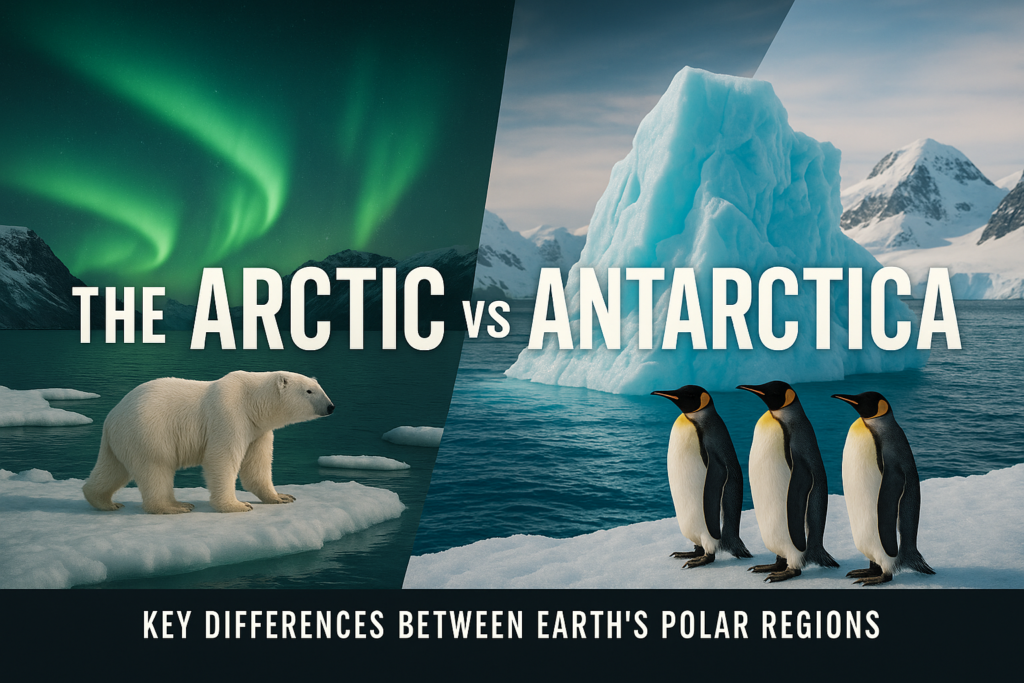
Imagine immense white landscapes vanishing towards the horizon, colossal icebergs drifting silently through freezing cold waters, and unique wildlife ingeniously built for Earth's most extreme conditions. Both the Arctic and Antarctica readily evoke these powerful images – they are undeniably some of our planet’s most stunningly wild places. Yet, while these distinct environments share the characteristic of being planetary extremes, the ways they differ are as vast as the geographical distance separating them. Truly understanding what distinguishes the Arctic from Antarctica is essential for choosing the polar adventure that speaks to you.
Fundamental Geographical Differences
So, what’s the absolute core distinction? It fundamentally boils down to their basic physical nature. The Arctic is primarily a vast, deep ocean surrounded by landmasses, a unique setup influencing its climate. Conversely, Antarctica presents the inverse – a massive, high landmass surrounded by the formidable Southern Ocean, utterly buried in ice. This single, stark geographical contrast dictates almost everything else, influencing climate patterns, shaping distinct wildlife habitats, and even defining exploration possibilities in these two regions.
The Arctic region mostly comprises expansive floating pack sea ice, a shifting mosaic covering approximately 10 million square miles of the Arctic Ocean itself. Glaciers and immense ice sheets? They're mainly found on surrounding islands like Greenland, adding to the Arctic covers. Antarctica, conversely, is a true landmass, an Antarctic continent hidden beneath an enormous ice cap making up 90% of its mass. Beneath ice cover reaching up to four kilometers thick lies diverse topography – unseen mountain ranges, valleys, and even active volcanoes, a hidden world under Antarctic ice.
Key Distinctions at a Glance
Feature | Arctic | Antarctica |
Geographic composition | Arctic Ocean surrounded by land | Continental ice sheet (landmass surrounded by ocean) |
Location | Northern Hemisphere (north of 66.5°N latitude - the Arctic Circle) | Southern Hemisphere (south of 66.5°S latitude - the Antarctic Circle) |
Governance | Eight sovereign nations hold territories | Antarctic Treaty System (unique international agreement, 54 nations) |
Average winter temperature | Around -40°C (-40°F) | Around -60°C (-76°F) – brutally colder |
Permanent human population | Yes (~4 million people) | No (only seasonal researchers) |
Land animals | Numerous species (polar bears, arctic foxes, reindeer) | Almost none (insects mainly) |
Sea ice extent | Fluctuates significantly, ~10 million sq km | Expands dramatically seasonally, ~14 million sq km |
Key wildlife | Iconic polar bears, reindeer, arctic foxes, walruses | Penguins galore, various seals (like the leopard seal), whales |
The Arctic: Ocean Covered by Ice
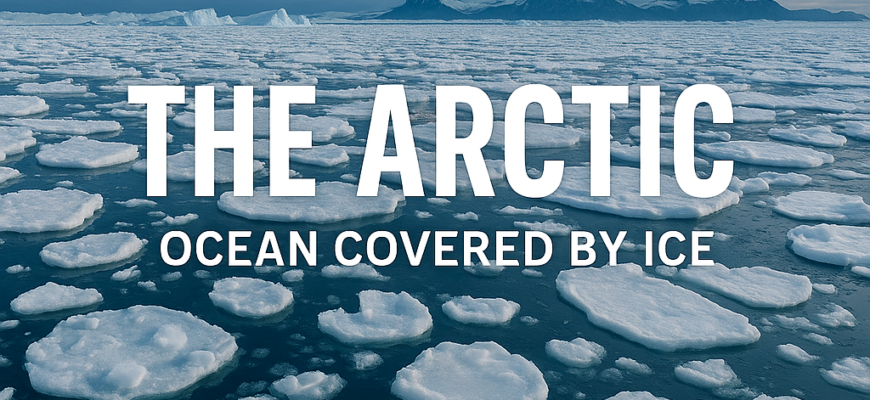
The Arctic region, defined by the imaginary Arctic Circle (~66.5° N latitude), is truly dominated by the northern polar ocean – an ocean covered by ice. This isn't static; it's dynamic, freezing substantially in winter and partially thawing in summer. Pack sea ice forms gradually: minuscule ice crystals consolidate, grow, and over time can become formidable multi-year Arctic ice several meters thick, a constantly changing skin on the ocean.
Because the northern polar ocean is semi-enclosed by vast continents (North America, Europe, Asia - these land masses are key), its sea ice can persist for multiple years, thickening in sheltered areas. However, climate change is hitting hard. We see increasingly rapid ice melts in summer; as sea ice melts, larger areas are covered only by thinner first-year ice come the next relentless harsh winter. This deeply impacts the ecosystem, especially apex predators like polar bears whose lives depend on stable frozen platforms for preying on seals.
A fascinating quirk: unlike Antarctica, the North Pole isn't on land. The northernmost point rests atop constantly shifting, drifting ice. Thus, the exact spot marking 90° North wanders with ocean currents! Standing there offers the unique sensation of being atop the world on floating ice, knowing the surface beneath is perpetually moving. Reaching the North Pole remains a significant expedition challenge.
Antarctica: The Isolated Southern Continent
Antarctica, often called the White Continent, is fundamentally different: a colossal landmass entombed beneath a vast ice cap, built from millennia of snowfall – a true Antarctic continent. Forget the Arctic's largely seasonal sea ice; Antarctic ice is overwhelmingly land-based ice, averaging 1,600 meters thick and blanketing nearly 14 million square kilometers of land.
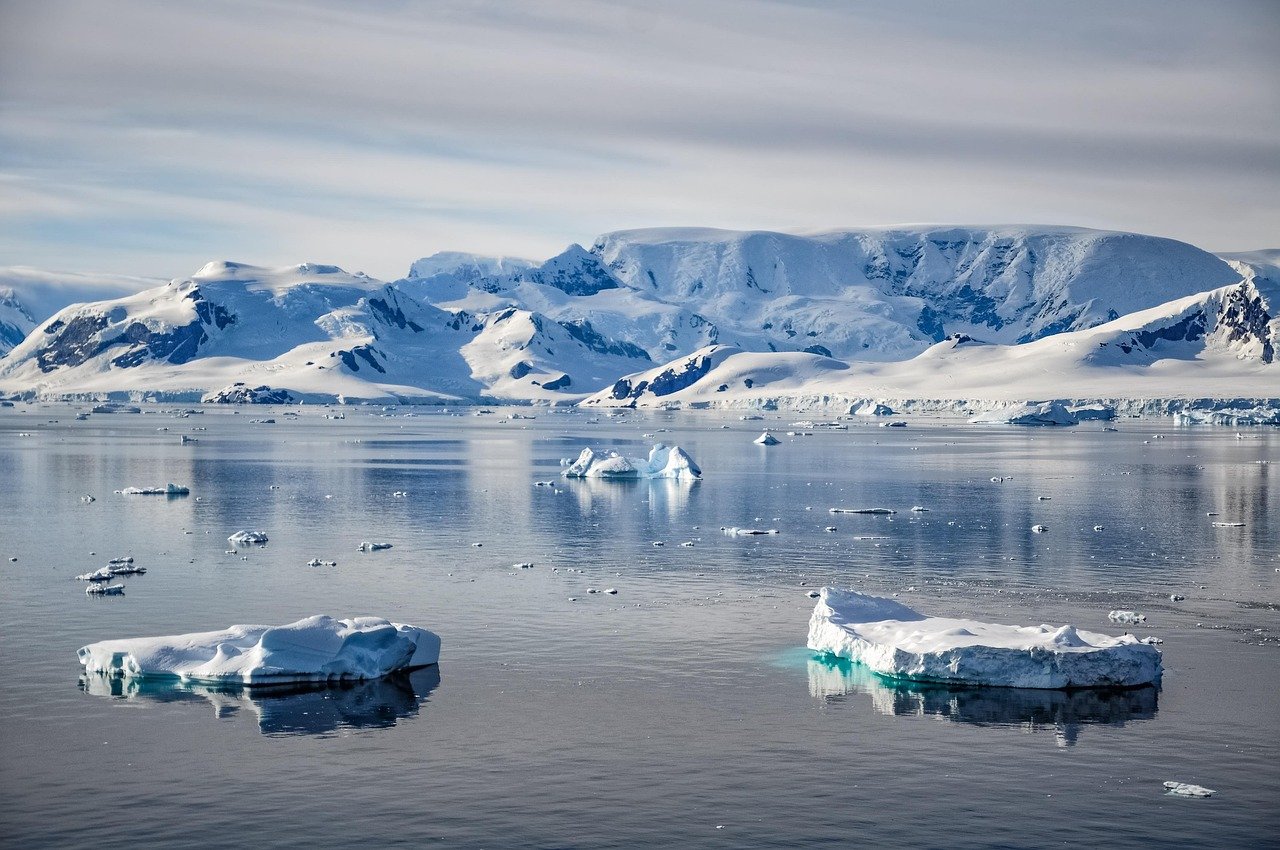
Where Antarctica's immense glaciers meet the Southern Ocean, they form spectacular, floating ice shelf formations, like the famous Ross and Larsen ice shelf. These gigantic platforms extend the continent's frozen footprint. From their edges, colossal icebergs calve into the waters surrounding Antarctica. These characteristically flat-topped, tabular icebergs are an Antarctic signature, unique behemoths towering 100 feet above water while hiding 900 feet below. Other polar regions have icebergs, but none match the scale and form of these Antarctic giants.
The monumental scale of these Antarctic ice sculptures creates mind-blowing icescapes. Imagine icebergs stretching for kilometers! Their ancient freshwater ice often radiates vivid blue hues, especially deep within crevasses or submerged portions. For cruisers near the subantarctic islands (like South Georgia) or the coast, these offer unbelievable photo opportunities.
Ice Characteristics and Climate Differences
Okay, both poles are frozen, but the nature of their ice and climate profiles differ dramatically in these distinct environments. Arctic ice generally trends thicker than its southern counterpart, due to differing formation processes and geography. But here’s the kicker: Antarctica is profoundly colder. This owes largely to its higher elevation, massive heat-reflecting ice cover, and infamous, powerful katabatic winds creating unique extreme environmental conditions.
Antarctic sea ice is typically thinner (1-2 meters), while multi-year northern ice often reaches 2-3 meters (sometimes 5m in ridges). Why? Antarctic sea ice forms in the exposed Southern Ocean, lacking the shelter containing much of the Arctic's frozen ocean cover. Also, the Arctic receives significant freshwater influx from rivers in Canada's north and Siberia, affecting sea ice formation dynamics.
Despite both being designated polar regions, Antarctica is drastically colder. Its extreme environmental conditions result from a perfect storm: the immense white ice sheet reflecting solar radiation; high average elevation (~3,000m); and ferocious katabatic winds – gravity-driven rivers of cold air accelerating down slopes. Antarctica's cold temperatures are legendary.
Earth's coldest surface temperature was recorded at Vostok station: an incomprehensible -89.2°C (-128.6°F), near the South Pole. The Arctic, by comparison, benefits from the moderating influence of the water beneath its ice cover, preventing such extremes even during the harsh winter. These intense cold temperatures shape all life.
When summer graces each hemisphere, things become relatively milder. Summer temperatures in the Arctic can reach 0-12°C (32-53°F) during the northern summer. Along the milder Antarctic Peninsula, Antarctic summer temperatures usually hover near freezing. These brief windows of milder weather and navigable summer sea ice make expedition travel feasible in both Antarctica and the Arctic.
Wildlife Differences Between the Arctic vs Antarctica
Prepare for major contrast! It's remarkable how divergent wildlife scenes are at the two poles, given similar challenges. The Arctic boasts greater overall biodiversity, especially large land mammals and abundant summer migratory birds. Antarctica has extremely limited terrestrial wildlife but compensates with extraordinarily rich marine life offshore.
Perhaps the most iconic difference? Polar bears live exclusively in the Arctic. Penguins inhabit only Antarctica and the Southern Hemisphere. That common mix-up – picturing polar bears and penguins together – ignores the millions upon million square miles separating them! Antarctica's lack of native ground predators is key.
Arctic Wildlife
The Arctic pulses with life, home to fascinating land mammals adapted to the extreme northern Arctic environment. Reigning supreme? The mighty apex predator – the polar bear – symbol of the Arctic, and the creature most hope to see. They evolved specifically for hunting seals (like certain seals) on shifting sea ice. Incredible hunters, these animals detect seal breathing holes under meters of snow and can swim vast distances between ice floes. Polar bear survival hinges on sea ice health. Seeing these bears here is unforgettable. More polar bears live here than any other large land predator; their presence defines the food web.
Other Arctic stars include:
Arctic foxes, camouflage masters, changing from brown/grey summer coats to white for winter. Spot cunning foxes darting across snow.
Reindeer (caribou), with wide hooves like snowshoes for snow travel and foraging.
Musk oxen, instantly recognizable by shaggy coats and dense underwool (qiviut).
Arctic wolves, hardy predators roaming the tundra in packs.
Arctic hares, perfectly camouflaged, showcasing survival adaptations in frigid Arctic lands. Look closely for these camouflaged hares.
The northern polar ocean marine mammals are equally impressive: bulky walruses using tusks to haul onto ice; enigmatic narwhals with spiral tusks; several seal species maintaining breathing holes in the winter ice. And whales! The Arctic Ocean hosts numerous whale species (Bowhead, Beluga, Orca). It’s a rich marine life zone.
Bird life explodes during the brief Arctic summer. Millions migrate north to nest and feed on arctic tundra and coastal bounty. Astonishing Arctic terns migrate from Antarctica and back annually – the longest animal migration! Snowy owls, another icon, rely on camouflage.
Antarctic Wildlife
Flip the coin: Antarctica has zero native land mammals. Instead, the icy Antarctic continent is famed for immense penguin colonies. Four main species frequent the Antarctic Peninsula: Adélie, Emperor (further south), Chinstrap, Gentoo. These birds traded air flight for water mastery, becoming exceptional swimmers using wings like flippers to 'fly' underwater.
Antarctic marine life's engine? Krill. Tiny, shrimp-like crustaceans in unbelievable abundance, forming the food web's base, feeding almost everything, including:
Six seal species (deep-diving Weddell, krill-eating Crabeater, formidable leopard seal, huge Elephant seals). Spotting a sleek leopard seal is thrilling.
Diverse whale species navigate the surrounding ocean (giant Blue, acrobatic Humpback, sleek Minke, intelligent Orcas).
Numerous specialized seabirds (graceful Albatrosses, Petrels, predatory Skuas).
One surprising land animal exists: the tiny wingless midge (Belgica antarctica). Astonishingly, it's the continent's only true year-round land animal and largest native (max 6mm long!). A survival champion, it endures freezing solid and losing 70% body water to survive winter.
Plant Life and Vegetation Differences
Plant life starkly highlights the geographical disparity between these distinct environments. The Arctic tundra supports surprising diversity – around 900 flowering plant species, plus hardy mosses, lichens, and low shrubs, all adapted to short growing seasons and permafrost. During the brief northern summer, fueled by continuous daylight (the midnight sun near the summer solstice), parts of the tundra can erupt in color as these flowering plants race to reproduce.
Antarctica, however, presents vastly different, sparse botany. Why? Overwhelming ice cover and harsh climate limit opportunities. The entire vast Antarctic continent boasts only two flowering plants: Antarctic hair grass and Antarctic pearlwort, mostly restricted to the milder northern Antarctic Peninsula and offshore islands. Most Antarctic 'vegetation' consists of incredibly resilient mosses, lichens, and algae clinging to life on exposed rock.
Beneath the waves, though, a different story unfolds in both polar regions' summers. Both the Arctic Ocean and the Southern Ocean witness explosive marine phytoplankton blooms. These microscopic algae are the crucial base of both marine food webs. Harnessing abundant sunlight (including the midnight sun), they photosynthesize massively, feeding krill and other small organisms. The Southern Ocean waters surrounding Antarctica are incredibly productive, with dense blooms supporting colossal krill populations sustaining nearly all Antarctic wildlife.
Human Presence and Cultural Differences
The human narrative of North vs. South couldn't differ more dramatically. The Arctic has been home for millennia. Indigenous Peoples inhabited challenging northern Arctic lands for thousands of years, fostering over 40 distinct ethnic groups (Inuit, Saami, Chukchi, etc.). They developed rich cultures and ingenious survival techniques attuned to polar regions. Today, ~4 million people live in Arctic regions across eight nations, including Canada's north and northern Greenland.
Antarctica? A stark contrast. No Indigenous population, no permanent residents. Human presence is limited to scientists and support staff at temporary research stations. Effectively 'undiscovered' until 1820, its exploration began earnestly during the "Heroic Age" (late 19th/early 20th C.), with daring expeditions into west Antarctica and east Antarctica, often driven by the race for the geographic South Pole. The quest for 90 Degrees South symbolized national prestige and endurance.
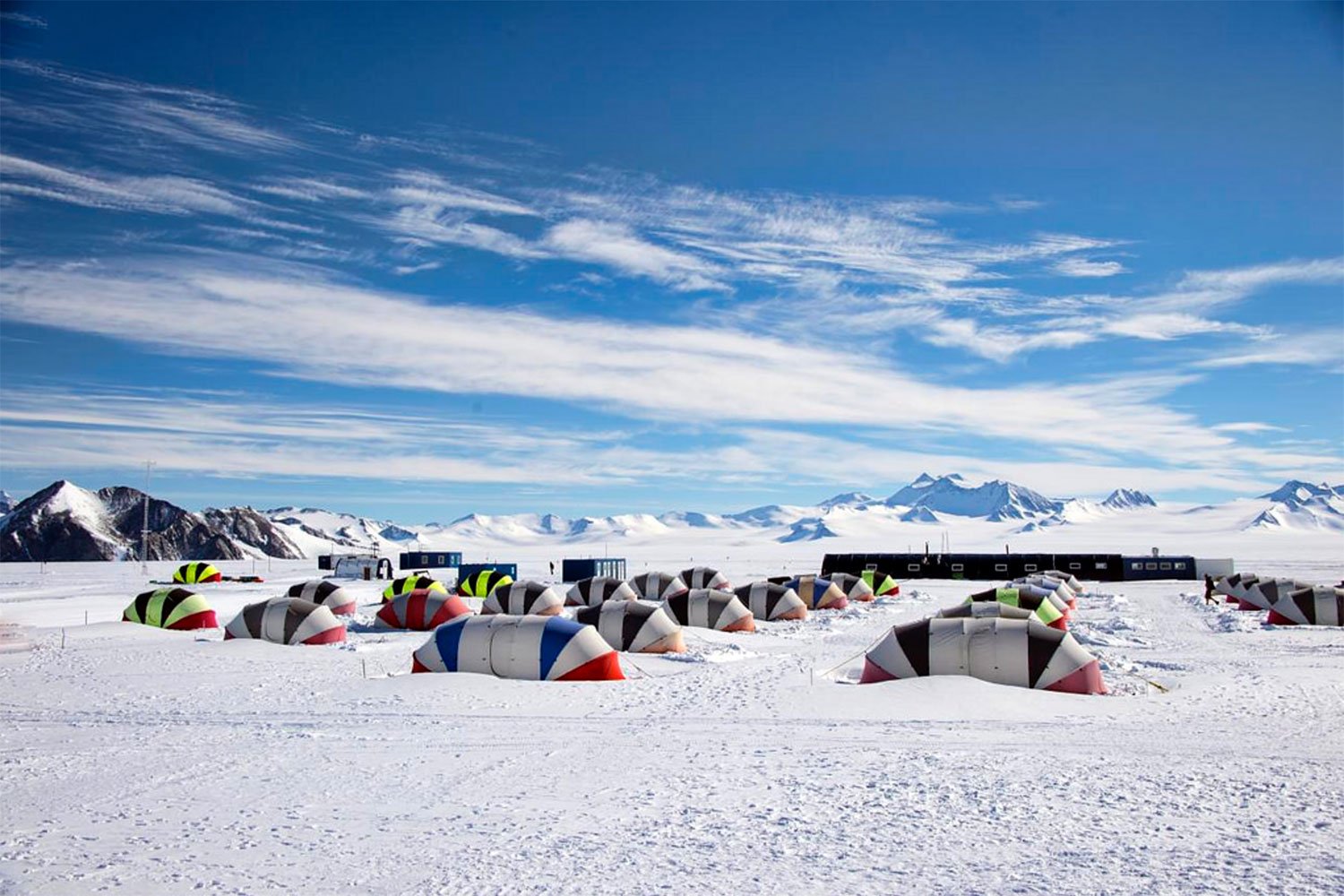
Today, Antarctica is a unique global lab with ~70 research stations (29 nations). Population fluctuates: ~4,800 in Antarctic summer, ~1,200 "wintering over". All activity operates under the Antarctic Treaty System (est. 1959), prioritizing peaceful science and environmental protection, freezing territorial claims, banning military activity. Reaching the geographic pole itself (high on the ice plateau, 90°S) remains a complex logistical feat, usually for national programs or specialized expeditions. The station there testifies to science at extremes. Journeying there is tough.
Traditional Arctic cultures devised brilliant solutions for the Arctic environment: specialized clothing (parkas with fur ruffs); effective snow shelters (igloos, semi-subterranean homes); transport innovations (dogsleds, kayaks). Many Arctic peoples today skillfully blend traditional practices with contemporary life, preserving languages, art, and ecological wisdom.
Travelers on an Arctic expedition often find chances to respectfully engage with living cultures: visiting communities, seeing performances, exploring museums showcasing everything from sagas to carvings or Viking ruins within the Arctic Circle.
Travel and Expedition Differences
Venturing into these destinations offers distinct travel experiences, despite shared icy landscapes. Arctic travel concentrates in the northern summer (May-Sept). Antarctic voyages operate during the southern summer (Nov-Mar, peak Antarctic summer). Opposite seasons mean a dedicated enthusiast could theoretically visit both Antarctica and the Arctic within 12 months!
The Arctic is often geographically easier to access from North America/Europe. Closer embarkation means shorter travel times. An Arctic expedition frequently offers varied scenery – frozen Arctic Ocean to blooming tundra – plus unique chances to experience Indigenous cultures.
Antarctic journeys almost invariably demand more time/effort. Most depart from southern Argentina/Chile. Then there's the Drake Passage – often rough water separating South America from the Antarctic Peninsula, usually two days sailing each way. The reward? Experiencing Earth's most remote, pristine wilderness, with extraordinary wildlife moments and dramatic icescapes around the immense Antarctic continent. Witnessing the scale near the polar plateau is humbling.
Activities and Experiences
What might you actually do? The focus differs somewhat between locations.
Arctic excursions often include:
Scanning sea ice for iconic polar bears (from safe distances!) – a top goal for many hoping to see these bears.
Hiking colourful tundra landscapes to viewpoints or waterfalls revealed by ice melts.
Visiting remote Arctic communities and cultural sites.
Searching for elusive foxes, musk oxen, reindeer, maybe quick-flitting hares.
Marveling at massive seabird colonies on sheer cliffs.
Zodiac cruising along dramatic glacier faces.
Antarctic activities focus more intensely on wildlife spectacles and raw, icy landscapes:
Visiting huge, noisy penguin rookeries – an overwhelming sensory experience!
Zodiac cruising amongst breathtakingly sculpted icebergs glowing blue.
Kayaking in sheltered bays, sometimes alongside seals or whales.
Photography workshops capturing unique Antarctic light.
The "polar plunge" – a quick, bracing dip for the brave!
Landing on the continent proper itself – a major milestone. Many trips visit wildlife hotspots like South Georgia.
Generally, Arctic trips might offer more chances to explore varied terrain on foot. Antarctic voyages often involve more observation from the ship/Zodiacs due to the vast icy environment and stricter regulations. Direct access to the Pole itself is highly restricted.
Climate Change Impacts on Polar Regions
Our planet's polar regions act as critical climate regulators. Disturbingly, both Antarctica and the Arctic face profound climate change impacts. The Arctic warms nearly four times faster than the global average, leading to dramatic summer sea ice reduction. This triggers a dangerous feedback loop: melting reflective white ice exposes darker ocean water, absorbing more heat, causing even more melting. Consequences for wildlife dependent on this platform like polar bears (relying on it for hunting seals) are dire. Rapid ice melts reshape the Arctic.
Due to smaller overall ice volume (thinner sea ice vs. Antarctica's massive land-based ice sheet), the Arctic is generally considered more immediately vulnerable than Antarctica's colossal ice cover. However, Antarctica sees complex changes too. Regions like the rapidly warming Antarctic Peninsula witness significant ice loss from glaciers and collapsing ice shelf formations, contributing to sea-level rise. Other areas might see temporary sea ice increases (linked to changing winds/currents) – a complex puzzle. Scientists intensely study both polar regions to understand changes and project future sea-level impacts. The fate of ice at the North Pole and South Pole matters globally.
Choosing Between Arctic and Antarctic Travel
The million-dollar question: Arctic or Antarctic? Your choice hinges on personal passions.
Consider Antarctica if:
You're captivated by penguins, dreaming of massive colonies.
You yearn for monumental icebergs and stark, pristine icescapes.
Visiting Earth's most remote continent sparks adventure.
Your focus is incredible marine wildlife (seals, whales) and overwhelming wildness. The South Pole region's mystique appeals.
The Arctic might be ideal if:
You're drawn to diverse landscapes, including vibrant summer tundra.
You value cultural exchange, learning about Indigenous peoples alongside wildlife viewing.
Seeing iconic northern animals (polar bears, walruses, reindeer, perhaps quicksilver foxes) tops your list. You want the best chance to see polar bears.
You seek natural beauty blended with human history north of the Arctic Circle. Possible northern lights are a bonus.
Don't forget practicalities! Consider when to travel (opposite seasons for Arctic vs Antarctic). Factor in time commitment (Antarctic trips usually need longer). Think about accessibility to departure points.
Whichever extraordinary destination you ultimately choose – the ocean covered Arctic teeming with life/culture, or the ice-smothered Antarctic continent offering remoteness/spectacle – you're guaranteed a profound, moving experience impossible elsewhere. Both Antarctica and the Arctic promise lifetime adventures.
Key Takeaways
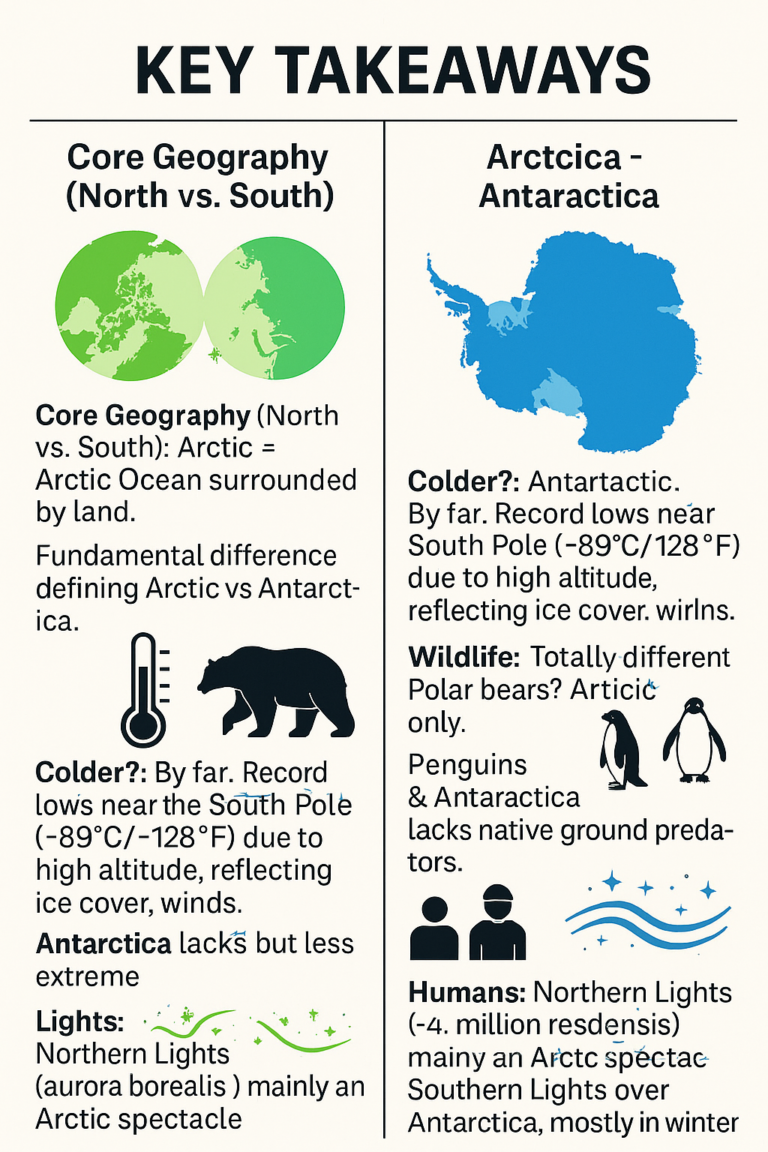
Core Geography (North vs. South): Arctic = Arctic Ocean surrounded by land. Antarctica = Antarctic Continent (landmass surrounded) by the surrounding ocean. Fundamental difference defining Arctic vs Antarctica.
Colder?: Antarctica. By far. Record lows near the South Pole (-89°C/-128°F) due to high altitude, reflecting ice cover, winds. Arctic is cold, but less extreme.
Wildlife: Totally different! Polar bears? Arctic only. Penguins? Antarctica & Southern Hemisphere. Antarctica lacks native ground predators.
Humans: Arctic has ~4 million residents (incl. Indigenous peoples). Antarctica? Zero permanent inhabitants, only temporary scientists under the peaceful international agreement.
Lights: Northern Lights (aurora borealis) mainly an Arctic spectacle. Southern Lights (aurora australis) over Antarctica, mostly in winter (few tours).
FAQ: Arctic vs Antarctic
What is the difference between the Antarctica and the Arctic?
The fundamental difference is geography. Antarctica is a massive land continent under a huge ice sheet, ringed by the ocean to its south, centered on the South Pole, with no native human population. The Arctic is primarily a vast ocean (the northern polar ocean) with shifting sea ice, surrounded by northern continents, centered on the North Pole over floating ice, home to diverse Indigenous populations. Simplest takeaway: North vs. South fundamentally boils down to: Ocean surrounded by land versus Land (landmass surrounded) by ocean.
Which is colder, the Arctic or Antarctica?
Antarctica is significantly colder. The record low (-89.2°C/-128.6°F) was near the South Pole. Its massive reflecting ice, high altitude, and strong winds create more extreme chill than the Arctic, where the water beneath provides a slight moderating effect.
Is the South Pole in the Arctic or Antarctic?
90 Degrees South is unequivocally in Antarctica. It's Earth's southernmost point (precisely 90°S), high on the Antarctic ice plateau (~2,835m elevation). The North Pole (90°N) is in the Arctic, but on drifting sea ice over the deep northern waters, not land. You can physically stand on the ice sheet at the designated marker. Journeying there is major.
Are polar bears in the Arctic or Antarctic?
Polar bears inhabit only the Arctic region. Zero polar bears exist in Antarctica – they're geographically separated by the globe! These predators are adapted for Arctic sea ice, primarily preying on seals (like certain seals). Their range spans the circumpolar north (Arctic Circle regions of Alaska, Canada [incl. Canada's north], Greenland, Norway [Svalbard], Russia). Antarctica's lack of large native land predators like these large carnivores allows huge penguin colonies to thrive. So, definitively: no polar bears anywhere near the pole! Head north to see these bears.